
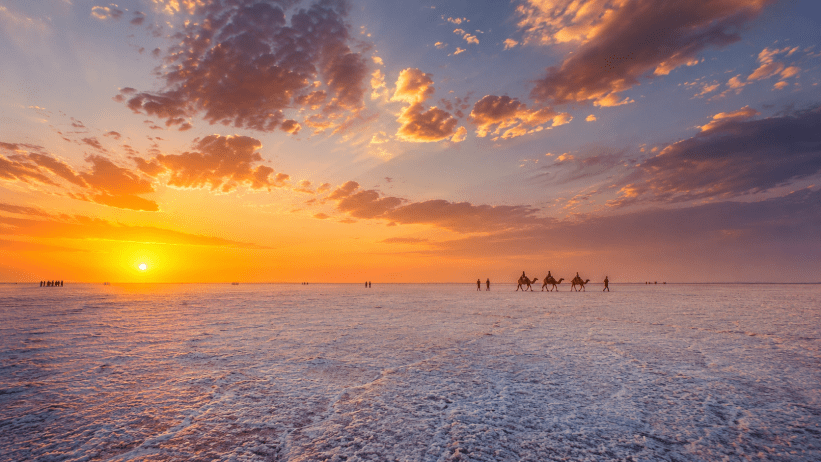
The White Rann of Kutch is one of India’s most extraordinary natural wonders — a vast salt marsh stretching across thousands of square kilometres in western Gujarat. During the dry winter months, the entire landscape transforms into a dazzling white expanse that resembles fallen snow, creating one of the most surreal landscapes on earth.
If you’ve ever scrolled through Instagram and stopped at a photo of an endless white horizon with a perfect orange sunset — chances are it was the White Rann. And while the photos are stunning, nothing prepares you for the moment you actually stand there, with nothing but white salt as far as the eye can see.
In this complete 2026 guide, we’ll cover everything you need to know to plan your perfect White Rann visit — from the best time to visit and how to reach Dhordo, to permits, things to do, where to stay, and insider tips you won’t find on most travel blogs.
Where Exactly is the White Rann?
The White Rann is located near Dhordo village in the Kutch district of Gujarat — approximately 85 kilometres north of Bhuj, the district headquarters. Dhordo recently gained global recognition when the United Nations World Tourism Organization (UNWTO) named it the “Best Tourism Village 2023” — a testament to its cultural and natural significance.
The Rann lies close to the India-Pakistan border, which is why a permit is required to enter. Don’t worry — this is a simple process, and we’ll explain it in detail below.
What is the Best Time to Visit?
The short answer: October to March, with November to February being the absolute peak.
Here’s a quick breakdown:
- November to February (Peak Season): This is when the Rann Utsav festival is in full swing. The desert is at its whitest, the weather is cool and pleasant, and the cultural programs at Tent City are spectacular.
- October and March (Shoulder Season): Quieter, more relaxed pricing, still beautiful weather. Great for travellers who want to avoid crowds.
- April to September (Off Season): Not recommended. Temperatures can exceed 45°C, and the monsoon (July-September) actually floods parts of the Rann.
Pro Tip: Plan Around the Full Moon
The most magical experience at the White Rann is visiting on a full-moon night. The salt desert reflects the moonlight, giving the entire landscape a silvery glow that feels almost otherworldly. The viewing area stays open until midnight on full-moon nights during Rann Utsav season.
Check the lunar calendar before booking. Full-moon dates in December, January, and February are especially popular — book accommodation at least 2-3 months in advance.
How to Reach the White Rann
By Air
The nearest airport is Bhuj Airport (BHJ), with direct daily flights from Mumbai. From the airport, the White Rann is about 85 km / 1.5-2 hours by road.
By Train
Bhuj Railway Station has direct connections from Mumbai, Ahmedabad, Delhi, and other major cities. From the station, drive 85 km to Dhordo.
By Road
The road from Bhuj to Dhordo via the Bhuj-Khavda highway is smooth and well-maintained. We strongly recommend hiring a private AC vehicle with an experienced local driver — public transport options are limited and unreliable. For comfortable transfers, check our vehicle rental service or one-way taxi options.
Permits — What You Need to Know
Because the White Rann lies near the India-Pakistan border, a permit is required to enter. Here’s the simple process:
- Where: The permit checkpoint is at Bhirandiyara village en route from Bhuj
- What You Need: Original photo ID (Aadhaar, Passport, or Driving Licence)
- Cost: Nominal entry fee (varies year to year, usually under ₹100)
- Timing: The checkpoint is open during regular tourist hours
If you book through a tour operator like us, we typically handle the permit process for you — making it completely hassle-free.
What to Do at the White Rann
1. Watch the Sunset
This is the signature experience. Arrive at least an hour before sunset to capture the magical transformation as golden, pink, and orange hues paint the white landscape. The viewing area gets crowded just before sunset — arriving early gives you the best photo spots.
2. Experience a Full-Moon Night
If your dates align, this is unmissable. The silver moonlight on the white salt is unlike anything you’ve seen. Carry a jacket — desert nights get cold, especially December to February.
3. Take a Camel Cart Ride
Traditional camel carts offer rides across the salt flats — slow, peaceful, and perfectly Kutchi. Available right at the viewpoint area.
4. Rann Utsav Cultural Nights
During the festival (Nov-Feb), Tent City hosts incredible cultural performances every evening — folk music, traditional dances like Garba, handicraft bazaars, and even fireworks on weekends.
5. Adventure Activities
For thrill-seekers, ATV rides, paramotoring, paragliding, and even hot air balloon experiences are available during peak season (weather permitting).
6. Photography Heaven
The White Rann is one of India’s most photogenic destinations. Wide horizons, dramatic skies, and mirror-like reflections during partial wet seasons. Wear bright, colourful clothes for stunning photo contrasts.
Where to Stay
The most popular options are:
- Tent City Dhordo: The official Rann Utsav accommodation with luxury Swiss cottages and royal suites. The most magical option.
- Resorts near Dhordo: Includes Praveg Royal Resort, White Rann Resort, and Road to Heaven.
- Heritage Bhunga Homestays in Hodka Village: Traditional Kutchi mud-mirror cottages just 15 km from Dhordo. An authentic cultural experience.
Important: During peak season (Nov-Feb), book accommodation at least 2-3 months in advance. Tent City and full-moon dates sell out quickly.
Insider Travel Tips
After organizing hundreds of White Rann visits over the years, here are some local insider tips:
- Carry layers — desert days are warm, nights are cold (December nights can drop to 8°C)
- UV sunglasses are a must — the white salt reflects sunlight intensely
- Wear colourful traditional attire — locals love when visitors embrace the culture, and your photos will be stunning
- Stay hydrated — even in winter, the desert dries you out quickly
- Charge your camera and bring a power bank — once you start shooting, you won’t stop
- Don’t litter — the Rann is a fragile ecosystem; carry your trash out
What to Combine with Your White Rann Visit
The White Rann is best experienced as part of a 3-4 day Kutch trip. Popular combinations:
- Kala Dungar — The highest point in Kutch (462m), just 46 km from Dhordo. Spectacular panoramic views and the famous “Magnetic Hill” phenomenon.
- Hodka Village — Cultural village 15 km from Dhordo. Meghwal artisans, Banni embroidery, and bhunga homestays.
- Bhuj — Heritage city with royal palaces (Aina Mahal, Prag Mahal) and the world-class Smritivan Museum.
- Dholavira — UNESCO World Heritage Site, the 5,000-year-old Harappan city.
Final Thoughts
The White Rann is not just a destination — it’s an experience that stays with you forever. The endless white horizons, the magical sunsets, the silver moonlit nights, and the warm Kutchi hospitality combine to create memories that last a lifetime.
Whether you’re a photographer, a culture lover, a couple seeking a romantic getaway, or a family looking for an unforgettable adventure — the White Rann delivers in ways no other destination in India can.
Ready to plan your White Rann experience? Our local Bhuj-based team can craft the perfect itinerary covering permits, accommodation, transport, and all the experiences mentioned in this guide. WhatsApp us anytime — we’d love to help!
Plan Your Kutch Trip with Us
Ready to Explore Kutch?
Let our local Bhuj-based experts plan your perfect Kutch trip — White Rann tours, Rann Utsav stays, Dholavira, Mandvi, and beyond. WhatsApp us for a custom itinerary.