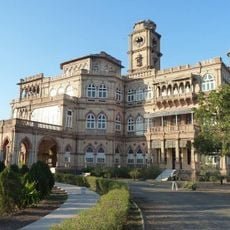
MacMurdo's Bungalow is a historic early-19th-century building in Anjar associated with Captain James MacMurdo, the first British political resident in Cutch. The bungalow is particularly significant for its rare Kamangari wall paintings depicting scenes from the Ramayana, Krishna traditions and local artistic motifs.
MacMurdo's Bungalow is a historic building in Anjar associated with Captain James MacMurdo, who served as the first British political resident in Cutch. The bungalow was constructed during his stay in Anjar in the early 19th century, around 1818.
What makes the building particularly important is its collection of traditional Kamangari wall paintings. The paintings include scenes from the Ramayana, including the battle between Ram and Ravana, the burning of Lanka and Sita in Ashok Vatika. Other paintings depict Krishna and the Gopis, Govardhan Hill, birds, plants and flowers.
The artwork is associated with the Kamangar tradition of Kutch. Historical accounts attribute these paintings to Muslim artisans, making the bungalow an important example of the region's distinctive artistic traditions and cultural interaction.
The bungalow was later used as the Deputy Collector's Office and is now recognised as a State Protected Monument. However, the building has suffered from neglect and deterioration, and recent reporting highlights concerns about the preservation of both the structure and its rare paintings.
For travellers interested in Anjar's history, MacMurdo's Bungalow can be considered alongside Jesal Toral Samadhi and the town's traditional markets and crafts. Because access conditions may change, visitors should verify locally before planning a visit specifically to enter the building.
Everything you need to know before visiting.
Explore the history and artistic traditions of Anjar and discover the rare heritage associated with MacMurdo's Bungalow. Contact Kutch Diaries to plan your Kutch heritage journey.